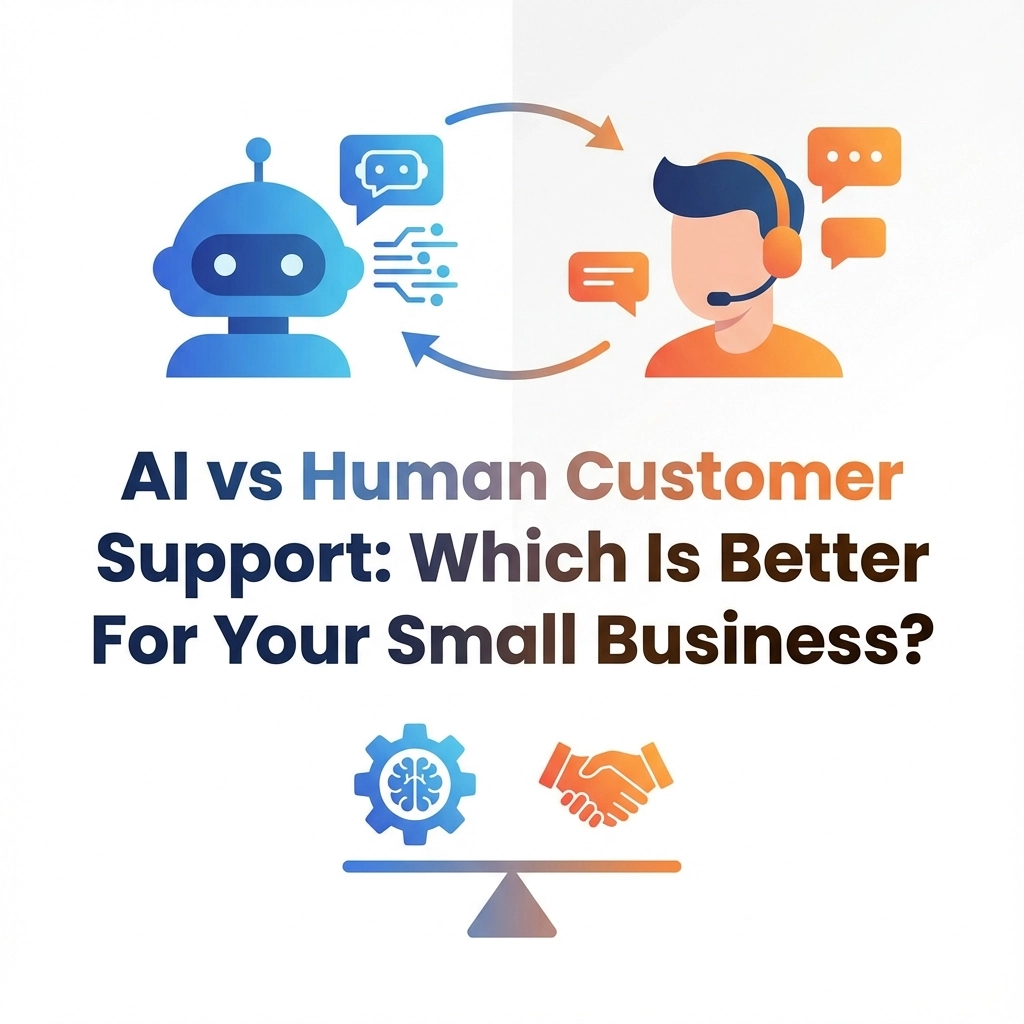
AI vs Human Customer Support: Which Is Better For Your Small Business?
Studies suggest the majority of small businesses lose potential customers due to missed after-hours calls. Discover why the hybrid AI + human approach is gaining traction.
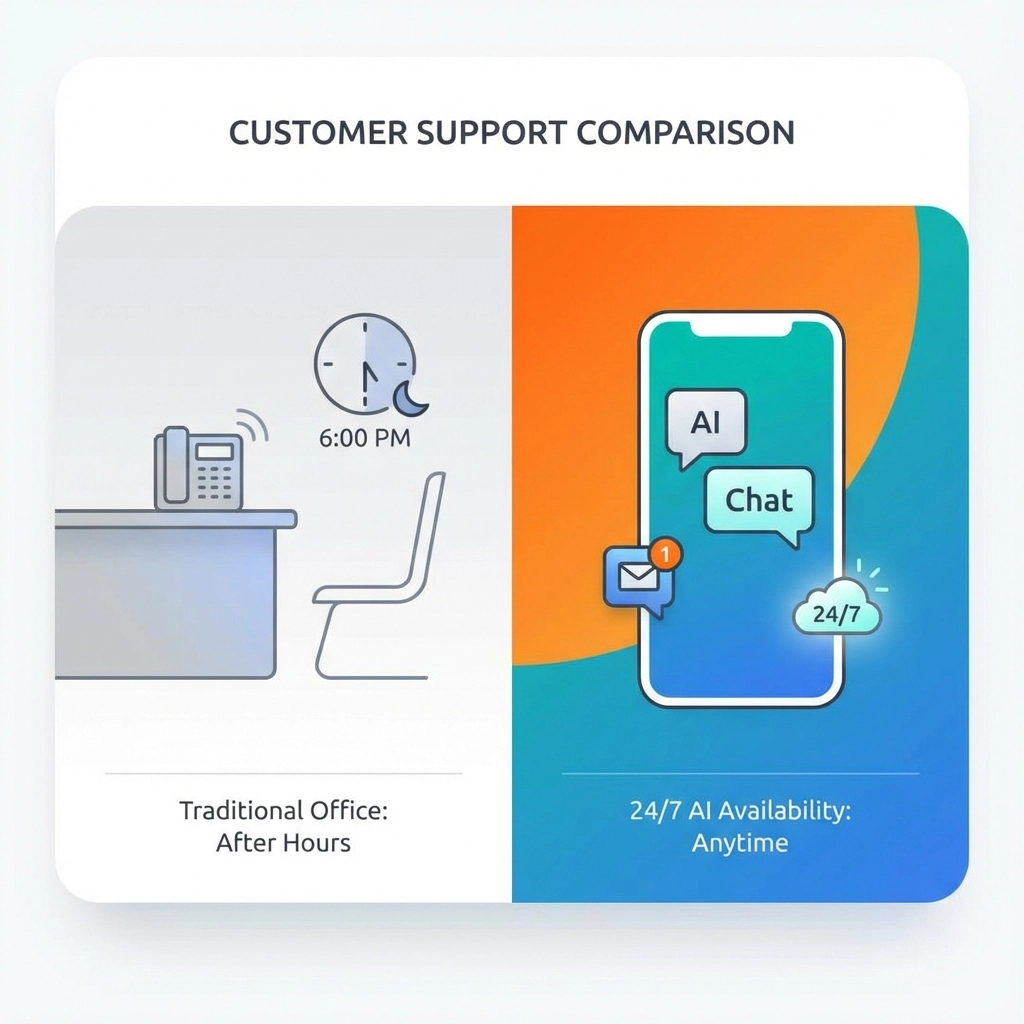
Here's the harsh reality: Studies suggest the majority of small businesses lose potential customers simply because they can't answer calls after hours (BrightLocal 2023, Forbes 2022). While you're sleeping, your competitors might be capturing leads, booking appointments, and solving problems that could have been yours to handle.
The question isn't whether you need better customer support—it's whether you choose AI, human agents, or something smarter. And if you're still debating this while your phone rings unanswered at 9 PM on a Saturday, you're already behind.
The Hidden Costs of Traditional Support Models
Most small business owners see customer support as a simple equation: hire someone to answer calls and emails. But the real costs run much deeper than that monthly salary.
Human-only support typically costs small businesses:
- $35,000–$45,000 annually per full-time support staff (Glassdoor, Indeed 2024)
- Lost revenue from after-hours inquiries that go unanswered—research suggests up to 40–50% of sales inquiries occur outside typical business hours in service industries (Salesforce)
- 15–20 hours per week of owner time handling overflow calls
- Higher customer churn rates due to slow response times
AI-only approaches create different problems:
- Nearly half (47%) of customers abandon interactions when they can't reach a human for complex issues (Vonage Global Customer Engagement Report 2023)
- Brand damage from robotic interactions during emotional situations
- Lost sales from AI systems that can't handle nuanced buying decisions
The businesses winning this game aren't choosing between AI and humans—they're combining both strategically.
When AI Support Becomes Your Secret Weapon
AI customer support isn't just a fancy answering machine. Modern AI can handle sophisticated conversations, book appointments, process payments, and solve problems with the speed of a computer and the helpfulness of your best employee.
Here's what AI does better than humans:
24/7 Availability That Actually Works
Your AI never calls in sick, takes vacation, or needs sleep. It answers every call within seconds, whether it's 2 AM on Christmas or during your busiest Monday rush.
Instant Response to Common Questions
Research indicates that 60–80% of customer inquiries are routine questions that AI can solve immediately (Zendesk 2024, Intercom 2023):
- "What are your hours?"
- "How much does [service] cost?"
- "Can I reschedule my appointment?"
- "What's included in [package]?"
Perfect Memory and Consistency
AI remembers every detail about every customer and delivers the exact same helpful experience every time. No bad moods, no forgetting important details, no inconsistent answers.
Scalable Without Breaking Your Budget
One AI system can handle unlimited simultaneous conversations. During your busiest periods, it never gets overwhelmed or puts customers on hold.
Where Human Support Still Rules Supreme
Despite all the AI advantages, human agents remain irreplaceable for specific situations that require emotional intelligence and complex problem-solving.

Humans excel when customers need:
Empathy During Frustrating Situations
When a customer's wedding flowers were delivered to the wrong venue, they don't want to explain their problem to a robot. They want someone who understands the stress and can make it right with genuine care.
Complex Problem-Solving
Multi-step issues, custom solutions, and unique situations still require human creativity and judgment. AI can gather information, but humans connect the dots.
Trust-Building for High-Value Decisions
For expensive services or major purchases, customers want to speak with someone who can address concerns, explain options, and build confidence in their decision.
Relationship Management
Long-term clients and VIP customers expect personal relationships. They want to speak with someone who knows their history and preferences.
Why the Hybrid Model Wins Every Time
The most successful small businesses aren't choosing AI vs. humans—they're using both strategically. This hybrid approach delivers results that neither option can achieve alone.
Industry research indicates businesses using hybrid AI + human support commonly report:
- Significant reductions in support costs
- Notable increases in team productivity
- Improved customer satisfaction scores
- The majority of routine inquiries handled instantly
Note: Specific performance gains vary by industry, implementation quality, and business context. The trends above reflect general findings from vendors like HubSpot, Intercom, and Zendesk, though precise percentages should be validated for your specific situation.
Here's how the hybrid model works in practice:
Intelligent Triage System
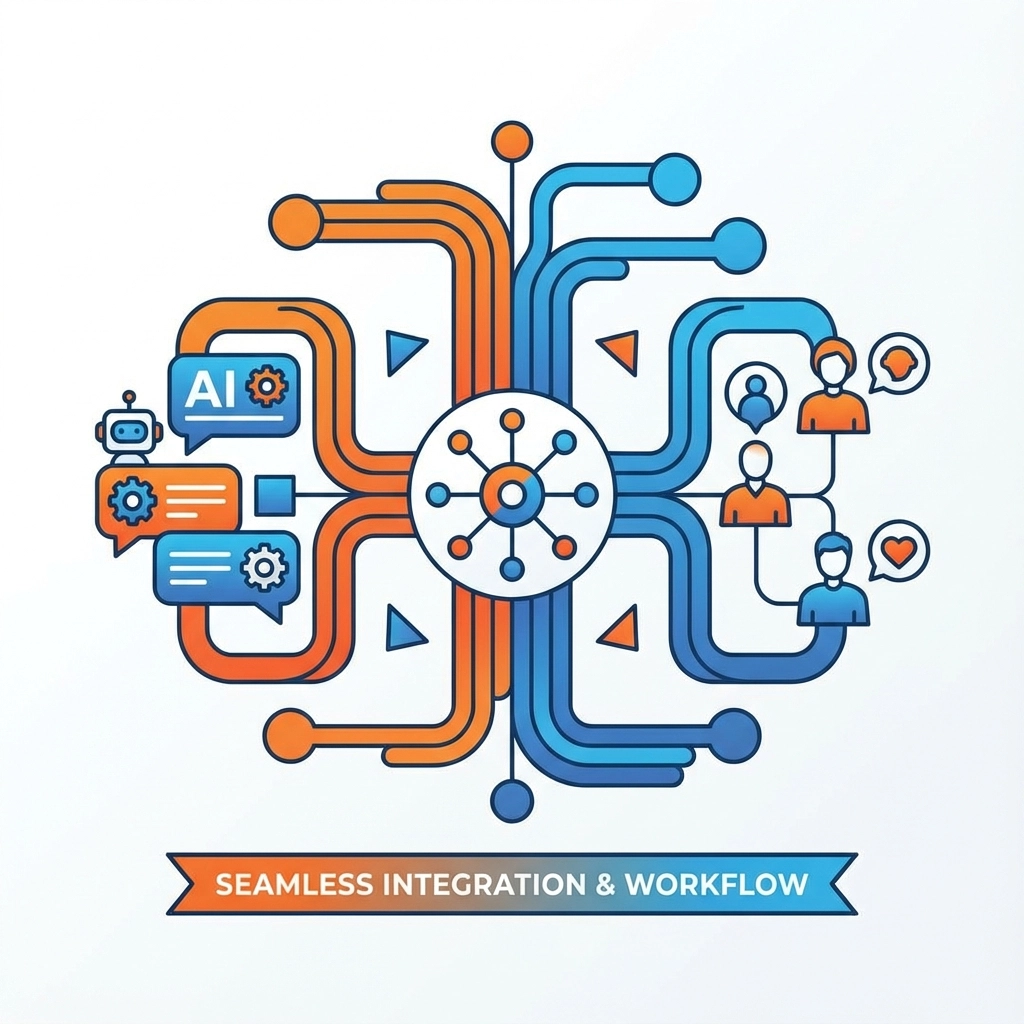
AI greets every customer and handles simple requests immediately. Complex issues get seamlessly transferred to human agents with full conversation history—no need for customers to repeat themselves.
Smart Escalation Triggers
The system recognizes emotional language, complex requests, or high-value customers and routes them directly to human agents while keeping detailed notes of the interaction.
After-Hours Lead Capture
AI captures leads, schedules appointments, and handles initial questions 24/7. Your human team follows up during business hours with warm leads instead of cold prospects.
Your Step-by-Step Implementation Guide
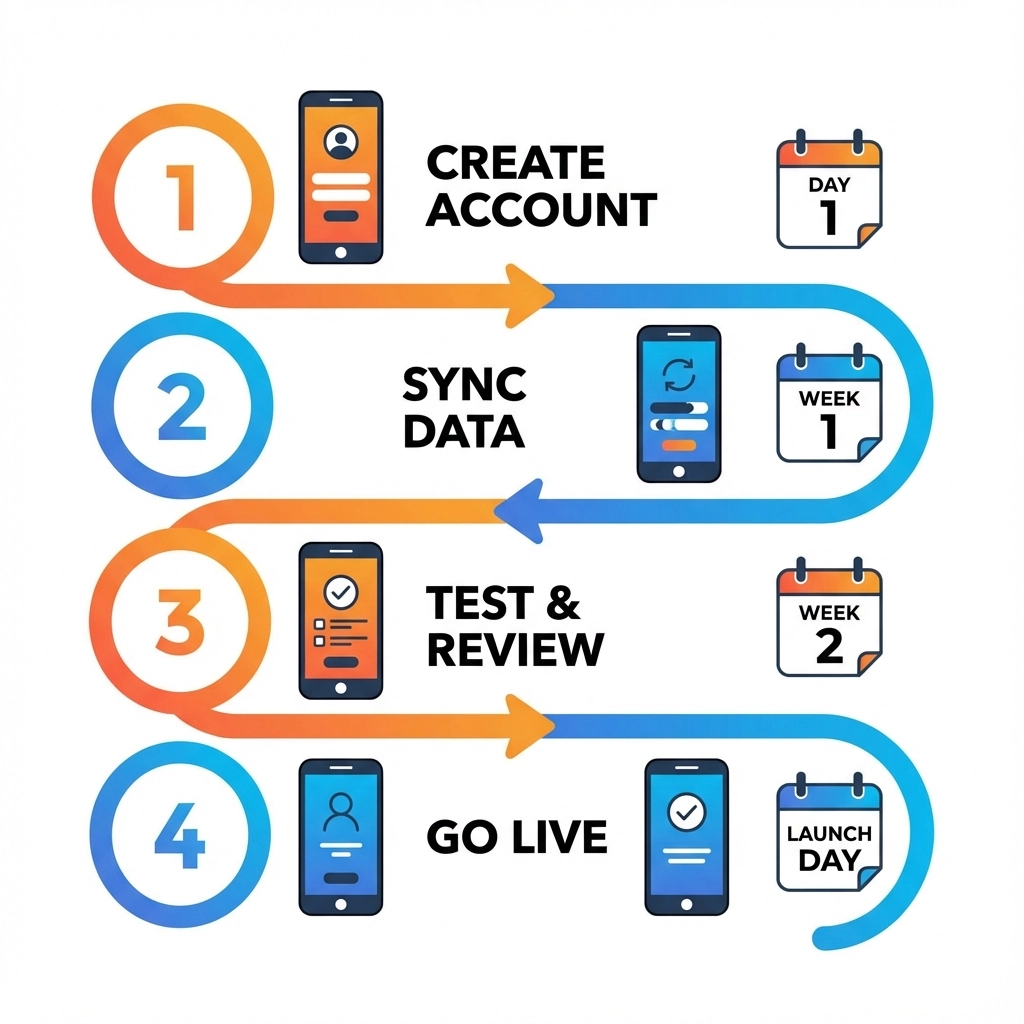
Ready to build your own hybrid support system? Here's the practical roadmap that works for small businesses:
Step 1: Audit Your Current Support Requests
Track every customer inquiry for two weeks and categorize them:
- Simple questions (pricing, hours, basic info)
- Appointment scheduling and changes
- Complex problems requiring human judgment
- Emotional or frustrated customers
Step 2: Identify Your AI Opportunities
Look for patterns in your simple questions. These become your AI's first responsibilities. Most small businesses find that 60–70% of inquiries fit this category.
Step 3: Set Up Smart Routing Rules
Program your system to recognize keywords and phrases that indicate complex issues:
- "I'm frustrated..."
- "This isn't working..."
- "I need to speak with someone..."
- "Can you help me understand..."
Step 4: Train Your Human Team
Your staff should focus on complex issues, relationship building, and follow-up from AI interactions. They become problem-solvers and relationship managers rather than order-takers.
Step 5: Monitor and Optimize
Track response times, resolution rates, and customer satisfaction. Gradually expand AI responsibilities as you identify new automation opportunities.
Real-World Success: How Hybrid Support Transforms Small Businesses
Note: The following examples illustrate typical results from businesses implementing hybrid support solutions. Individual outcomes will vary based on implementation, industry, and business context.
Illustrative Example: Local HVAC Company
Before: Owner spent 25 hours/week answering calls about pricing and scheduling. Lost a significant portion of after-hours calls.
After: AI handles initial inquiries and basic scheduling. Owner focuses on complex installations and customer relationships.
Typical Results: Substantial reduction in administrative time, significant increase in after-hours lead capture, and meaningful additional annual revenue.
Illustrative Example: Dental Practice
Before: Two full-time receptionists struggled to handle appointment requests, insurance questions, and patient concerns during peak hours.
After: AI manages appointment booking and common questions. Human staff focuses on patient care and complex insurance issues.
Typical Results: Reduced staffing burden while improving patient satisfaction scores.

Getting Started: Choose Your Hybrid Strategy
The key to success is starting with the right foundation. You need an AI system designed specifically for small businesses—one that's smart enough to handle real conversations but simple enough to set up quickly.
Look for these essential features:
- Natural conversation abilities (not just keyword matching)
- Appointment booking and payment processing
- Seamless human handoff with conversation history
- Integration with your existing phone and messaging systems
- 24/7 operation without additional setup
TryMainline offers exactly this type of hybrid solution, designed specifically for small businesses that want AI efficiency without losing the human touch.
Your next steps:
- Calculate how much time you currently spend on routine support tasks
- Identify your most common customer questions and requests
- Test a hybrid system for 30 days and measure the difference
- Scale up AI responsibilities as you see results
The Future Is Hybrid—And It's Already Here
While you're reading this, your smartest competitors are already using hybrid AI + human support to capture more leads, satisfy more customers, and grow faster than ever before.
The question isn't whether AI or human support is better. The question is: Will you combine them strategically to serve your customers better, or will you stick with outdated approaches while competitors adapt?
The businesses that master hybrid support will have a significant advantage. Your customers expect instant responses, 24/7 availability, and personal attention when they need it most.
You can deliver all of that—starting today.
Ready to Transform Your Business?
See how AI phone support can help you never miss another customer call. Book a personalized demo today.